Web design for businesses across Spain, in Spanish and English
We work with businesses across Spain, remotely: websites, phone apps and tools to sell more and run things smoothly. You see the plan and the cost of each step before anything starts, approve every screen, and everything is tested on real phones before it goes live.
Both languages
Plans, previews and reports in English or Spanish.
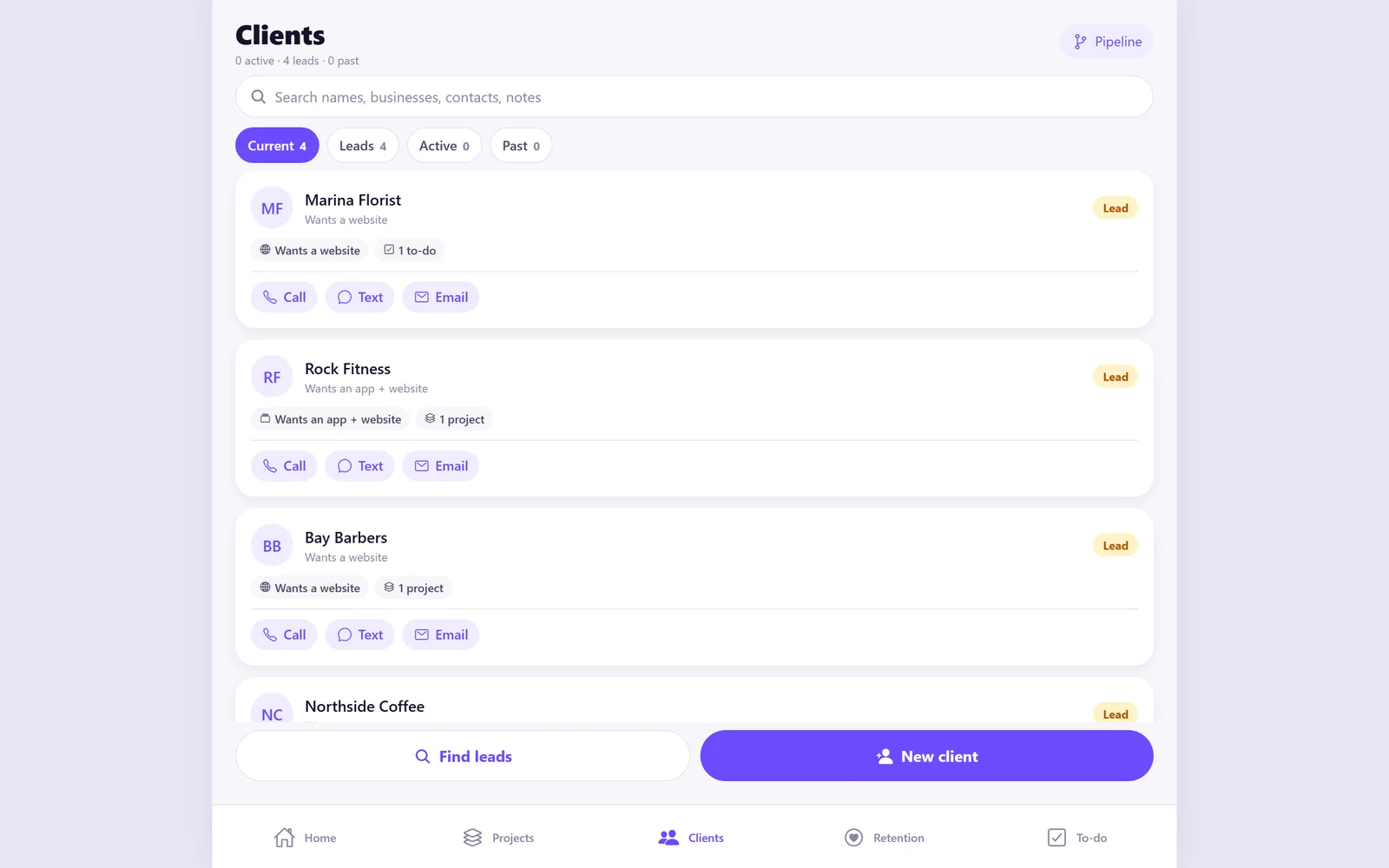
Everything in one place
Your projects and messages, wherever you are.
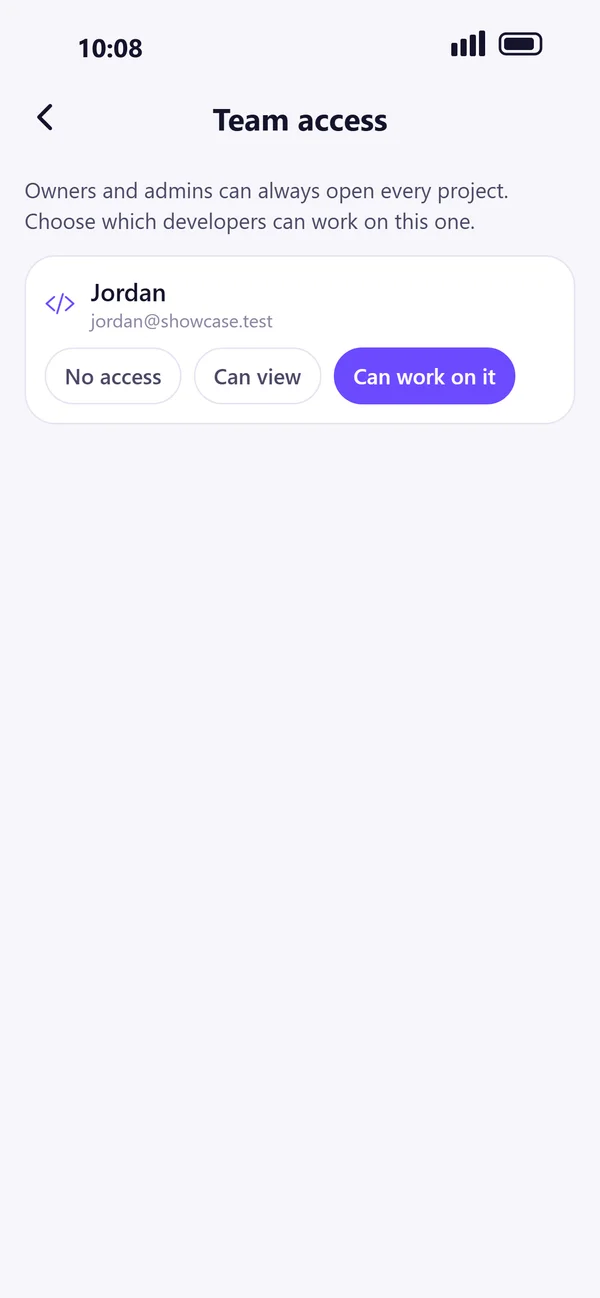
A clear team
You always know who is working on what.
Web design in Spain, from the north coast to the islands
If you are looking for web design in Spain, you probably want what every business wants: a site that looks right on a phone, shows up on Google when someone searches for what you do, and turns visits into calls, bookings and orders. We work with businesses across Spain, remotely, and the whole project can run in English, in Spanish, or in a mix of both.
Plenty of businesses in Spain are run by people whose first language is English, or serve customers who speak several languages. That is where a properly bilingual website matters most. Your Spanish pages are written for Spanish searches, your English pages for English ones, and each has its own titles and addresses so Google shows every visitor the right version.
You tell us what you want in your own words, typed or spoken. We ask a few friendly questions, then send a written plan with the cost of every step. You open live previews of each page on your own phone and approve them before anything is built. We build websites, WordPress websites you can edit yourself, and iPhone and Android apps. Websites start from €300 and apps from €350.
Spanish that sounds like Spain
We write Spain's Spanish: "móvil", not "celular"; "pide cita", not a stiff word-for-word version of "book an appointment". The phrases people actually search for in Spanish are often nothing like a direct translation of the English.
If you trade in Catalonia, Valencia, the Balearics, Galicia or the Basque Country, your website can also be in Catalan, Valencian, Galician or Basque. A site can have up to seven languages, and you approve each one before it goes live.
How people pay in Spain, and how you get paid
We quote and invoice in euros, and you can pay us by card. No currency conversion and no surprises: you see what each stage costs before it starts.
Your customers have their own habits. Most people in Spain pay by contactless card or phone, and between friends and family Bizum has become the everyday way to send money. It is a very common habit, but we do not connect Bizum to websites: the online payments we set up are card payments, straight to your own account. If you accept Bizum at the counter, we can say so clearly on your page so nobody has to ask.
Gyms, language schools and clubs in Spain usually charge a monthly fee. With bookings and memberships, members pay by card, book their class and check the timetable from their phone. For bars and restaurants, online ordering with no commission takes collection and delivery orders without handing a share of every order to a delivery platform.
Prices shown with IVA included
Consumers in Spain expect to see the final price with IVA (VAT) included. In your online shop, ticket pages or gift cards, prices appear the way Spanish customers expect. In the Canary Islands, Ceuta and Melilla, you set prices with the local tax that applies to you.
August, bank holidays and summer hours
Many Spanish businesses change their hours in summer, close for part of August or open on local fiestas. From your portal you change opening hours and prices yourself, and we remind you to update your Google profile too, so it always matches your website.
Data protection in Spain, explained simply
Two sets of rules apply in Spain at the same time: the EU's General Data Protection Regulation (GDPR, known in Spain as RGPD) and Spain's own law that sits on top of it, the LOPDGDD (the Organic Law on the Protection of Personal Data and Guarantee of Digital Rights). The Spanish Data Protection Agency enforces them. Spain's information society law, the LSSI, adds rules on cookies, marketing emails and the business details your website has to show.
For a website, all of that comes down to a handful of things: say who you are and how to reach you, explain what personal data you collect and why, ask only for what you need, never send marketing to people who did not ask for it, and do not set non-essential cookies without permission.
We build that in from the start. Your site gets a privacy page filled in with your business details, forms ask only for what is needed and ask for consent clearly, and our cookie-free visitor stats let you measure your site without a consent pop-up for every visitor. We are not lawyers, so if you handle sensitive data it is worth asking your gestoría or adviser to check it too.
Clinics, health and children
Dental and medical clinics, physiotherapists, therapists and children's academies handle specially protected data. On those projects we plan carefully what is stored, who can see it and for how long, and write it into the plan for you to check.
Local SEO in Spain: Google Maps, "cerca de mí" and WhatsApp
When someone in Spain needs a plumber, a hairdresser or somewhere for dinner, they pick up their phone and search "peluquería cerca de mí" ("near me"), "abierto ahora" ("open now"), or the service plus the name of the neighbourhood. The first thing they see is usually Google's map with three businesses, before any website. That is why local SEO and Google Maps matter as much as the site itself.
We work on your Google Business Profile, create a page for each service and for the areas you really cover, make sure your name, address and phone number match everywhere, and help you get more Google reviews with your own review page and a QR code for the counter.
Then there is WhatsApp. Many people in Spain would rather send a message than call, so your site gets a clear WhatsApp button next to tap-to-call, opening hours and directions.
Searches people really type
A good keyword plan uses what people actually type, in both languages: "dentista en Valencia centro" as well as "English-speaking dentist Valencia", not brochure phrases. With monthly SEO you get an audit, a keyword plan, fixes you approve and a report each month.
A .es or a .com domain
Many Spanish customers trust a .es address more: we find yours, show you the price first and connect it with your business email.
Businesses across Spain we help
Bars, restaurants and cafés
A phone-friendly menu that is always up to date, bookings, and collection or delivery orders without commission.
Online ordering →Hair and beauty salons
Online appointments, clear price lists, gift cards and a loyalty card on the phone.
Bookings →Clinics and physiotherapy
A page per treatment, appointment requests and extra care with patient data.
Web design →Gyms, academies and studios
Class timetables, card-paid memberships and an app to book a place.
Apps →Builders and trades
Photos of past jobs, a quote form or calculator, and pages for every area you cover.
Local SEO →Local shops
An online shop to sell beyond your street, with click and collect or delivery.
Online shop →Working remotely with businesses all over Spain
We work remotely and keep to Spanish business hours. Video calls are booked in the morning or the afternoon, whichever suits you, and messages go through your business portal, where you also see progress, your website stats and change requests with photos. If your business is in the Canary Islands, remember they are an hour behind the mainland; we allow for that when we suggest times.
If your project includes an app, we publish it on the App Store and Google Play, both available everywhere in Spain. We prepare the listing in Spanish and English, the screenshots and the privacy answers the stores ask for, and handle the submission. Find out more about how we publish apps on the App Store and Google Play.
After launch, website care checks your site every five minutes and sends a monthly report.
Remote, but never out of the loop
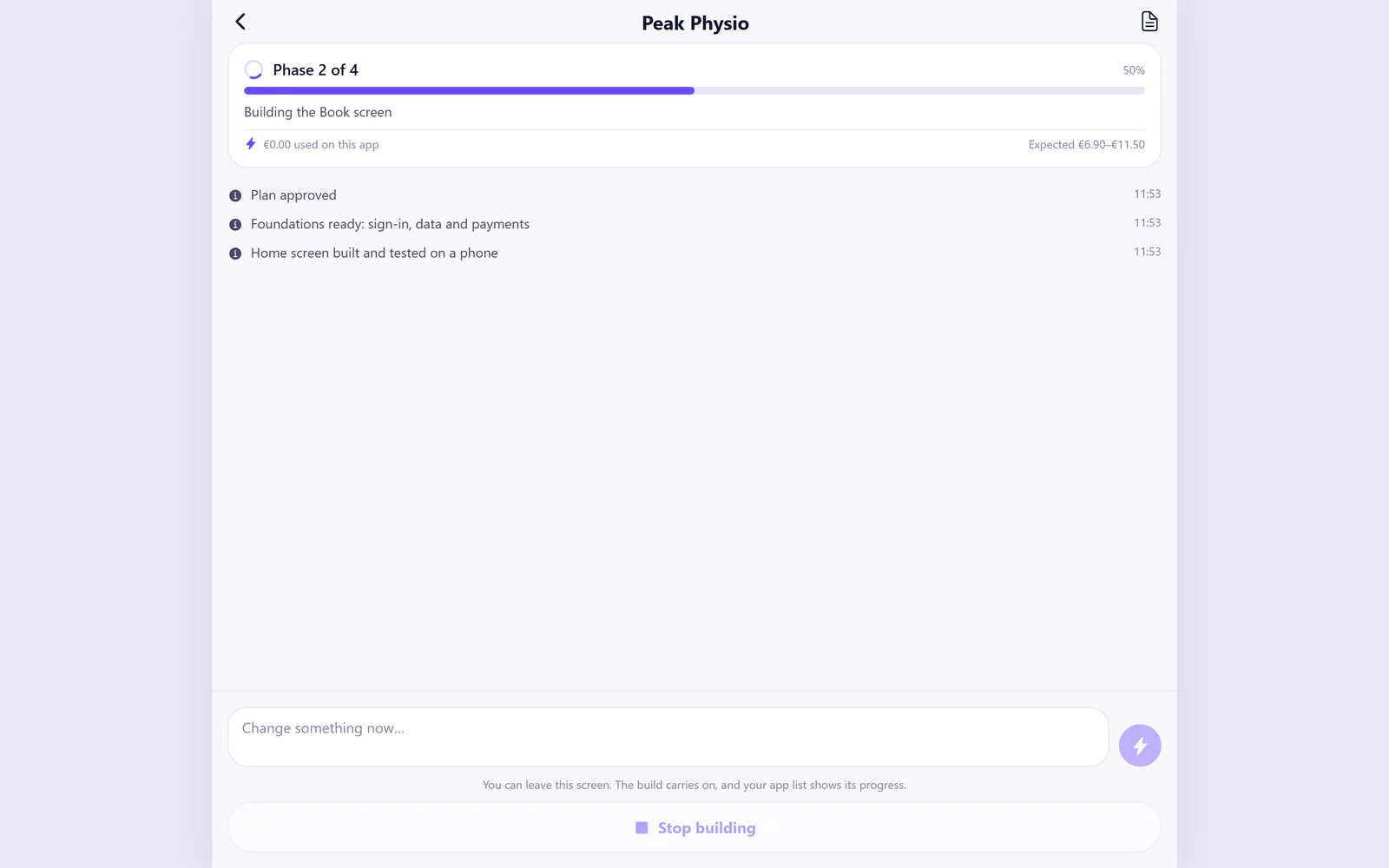
Follow your project live from anywhere: the plan, the previews, the build and the testing, with every message and decision saved in your portal.
Web design in Spain: common questions
Do we need to meet in person?
No. We work remotely with businesses across Spain. Plans and previews are shared online, and previews open on your own phone so you can try them like a customer. If something is easier to talk through, we book a video call.
Which currency do you quote and invoice in?
Euros. You get a written plan with the cost of each step before anything starts, and you can pay by card. If anything changes mid-project, you see the new cost and approve it first.
Can my website take Bizum payments?
Bizum is everywhere in Spain, but we do not build it into websites. The online payments we set up, for orders, shop, tickets, gift cards or memberships, are card payments that go straight to your own account. If you accept Bizum in person or for deposits, we can say that clearly on your site.
Will my website follow GDPR and Spain's LOPDGDD?
We build with both in mind from day one: a privacy page with your business details, forms that only ask for what is needed, clear consent before data is saved, and cookie-free visitor stats. We review it with you before launch. We do not give legal advice, so if you handle health data or children's data, ask your gestoría or lawyer to look over it as well.
Do I need a cookie banner?
Only if your site uses non-essential cookies, such as advertising pixels or some measurement tools. Our visitor stats work without cookies, so many sites do not need a banner at all. If you add advertising pixels, you do need consent first.
Can my site be in Spanish, English and Catalan?
Yes. A website can have up to seven languages, so it can be in Spanish, English, Catalan, Valencian, Galician, Basque or others your customers speak. Each language gets its own pages, titles and web addresses, and you approve every one before it goes live.
How much does a website for a Spanish business cost?
It depends on what you need, which is why the plan shows the cost of each step before we start. As a guide, websites start from €300, WordPress websites from €200 and website care from €30 a month.
Will my app be available everywhere in Spain?
Yes. The App Store and Google Play work across Spain, including the Canary Islands, Ceuta and Melilla. We prepare the listing with screenshots, text and privacy answers, in Spanish and English if you like, and handle the submission to both stores.
Running a business in Spain?
Tell us what you need, in English or Spanish. We will reply with a few questions, a written plan and the cost of each step before anything starts.